


In 2018, MEP were selected by Brett Aggregates to supply a 200 t/h
sand washing and effluent plant as a part of the new site in Newhaven, East Sussex.
In early 2019, following planning approval at the site, the design and machine selection for the plant was reviewed and revised to handle an increased throughput of 300 t/h.
Atherton Materials Handling were the Principle Contractor, and a team made up of MEP, Centristic, Leicester Electrical Services, Metso and Vision successfully supplied, installed and commissioned the new plant over the winter of 2019-2020.
The Process
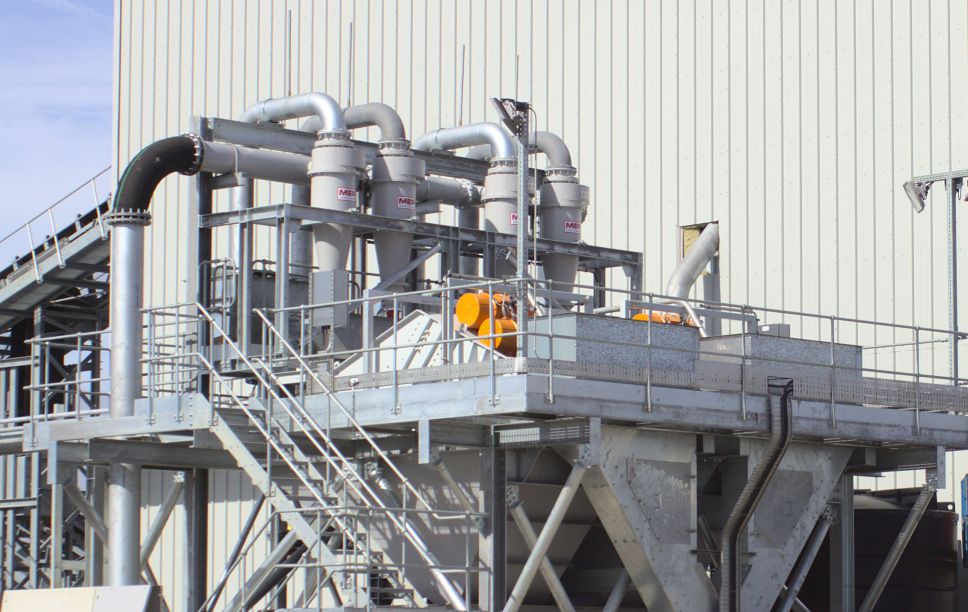
The sand and water slurry collected in the sump is pumped using the existing pump to four new MEP Cyclones. The underflow of the Cyclones pass by gravity to the existing dewatering screen.
The overflow from the MEP Cyclones report to a new Water Control Box and is recycled to maintain the sump level and optimise water and power consumption.
The sand product is dewatered using the existing dewatering screen to minimise final product moisture.
The excess water, together with silts and clays, overflow the Water Control Box to a new Effluent Tank.
The effluent is then dosed with polyelectrolyte flocculant in the existing thickener feedbox, improving the clarity of the supernatent. The Polymer Make Up Unit (PMU) flocculant dosing causes the suspended solids to agglomerate and become larger and heavier which accelerates the solids settling and de-watering processes within the thickener tank.

The sand plant feed material from the gravel washing plant totals to a maximum of 300 t/h of < 4.00 mm sand. The slurry has an approximate maximum silt content of 2% by weight of the ARB. The plant is designed to produce a concrete sand suitable for stockpiling with an inclined radial conveyor.
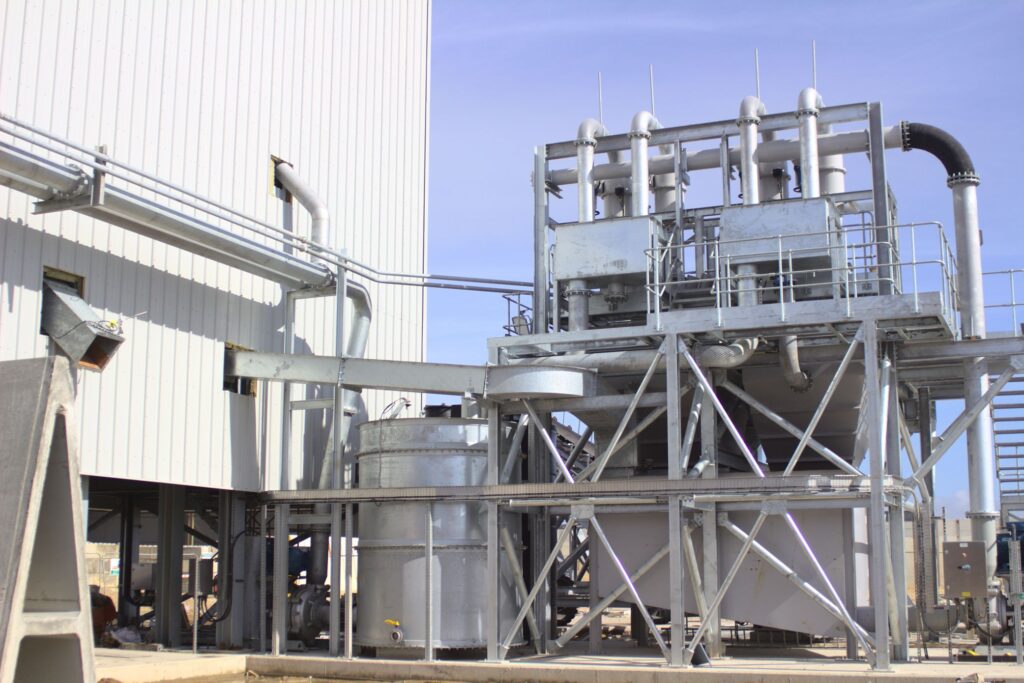
The feed slurry is provided to the Sand Sump by chute from the sizing screen building. The slurry is pumped with a centrifugal pump to four MEP Cyclones.
The underflow of the Cyclones report to two MEP De-Watering Screens where the sand is dewatered to minimise the final product moisture.

The Cyclone overflows reports to the Water Control Boxes where possible it is recycled to maintain the sump level and optimise water and power consumption.
The excess water, together with silts and clays, overflow the Water Control Boxes and report to the adjacent Effluent Tank.
The effluent is pumped by a centrifugal pump to the MEP Ø8.0m Thickener.
The Thickener is dosed with a liquid flocculant supplied by a MEP Polymer Make-Up Unit (PMU) to accelerate the solids settling process within the Thickener.
The thickened sludge will underflow the Thickener and is either pumped to the Dewatering Screens where is mixed with the sand product or an option to bypass the screens is available to site.
The clean water overflowing the Thickener flows by gravity to the adjacent Clean Water Tank which is then pumped by a centrifugal pump to the plant spray bars.